How Warzone Ranked Became the Stage for the Iri Invitational 2026
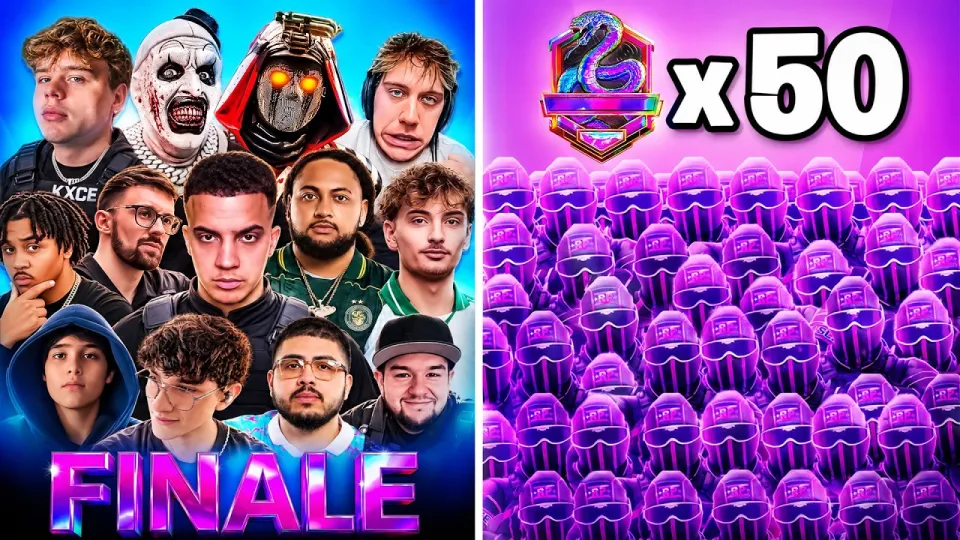
Video: Can 50 Iridescents Defeat STREAMERS? (FINALE)
Want articles like this for your own video to promote it on YouTube and Google? Order them through the Telegram bot @sat_sit_bot. The bot writes and publishes the articles itself (with your YouTube video embedded) on popular topical websites (no ads). Try it free: 50 articles on us.
· based on the channel Swagg
Key takeaways
- 50 Iridescent-ranked players faced a lobby of Warzone streamers across six games of Rebirth Island ranked solo customs.
- The first Iri Invitational carried a $2,000 prize pool and ran as a full series finale with all POVs.
- Confirmed names include Swagg, Shifty, Hisoka, JoeWo, Metaphor, Kxce, Diablo, Dongy, Kenner and Ketchup.
- The broadcast flagged a dedicated segment questioning whether Kenner was cheating, and several streamers left early.
- The format paired ranked-grind specialists against content creators, exposing a real gap in ranked discipline.
Warzone ranked has produced its own class of specialist: the Iridescent grinder who treats Rebirth Island like a spreadsheet. The Iri Invitational, organized and streamed by Swagg, tested that class directly by putting 50 Iridescent-ranked players into Rebirth Island ranked solo customs against a roster of well-known Warzone streamers over six games for a $2,000 prize. The series finale, published on Swagg's channel, is the clearest look yet at what happens when ranked discipline meets creator-level mechanics under tournament pressure. You can catch Swagg's live ranked runs and future invitationals on his Twitch channel.
What the Iri Invitational actually was
The Iri Invitational was a custom-lobby tournament built on Warzone ranked rules rather than public matchmaking. Swagg assembled a mixed field: Iridescent-ranked competitors on one side and established streamers on the other, then ran the whole thing as a multi-game series with every participant's point of view captured. Six games of Rebirth Island ranked solo customs formed the backbone of the finale, and the broadcast cut between POVs so viewers could follow individual fights instead of a single observer camera.
The prize pool sat at $2,000, modest by esports standards but enough to make every placement matter in a lobby where respawns are limited and rotations are contested. The player list read like a cross-section of the ranked and creator scenes: Swagg, Shifty, Hisoka, JoeWo, Metaphor, Kxce, Diablo, Hero, Dongy, Kenner, Ketchup, Repullze, Saxzu, Lucky, and a long tail of Iridescent qualifiers. The format worked because it removed the usual excuse — everyone was in the same lobby, on the same map, under the same ruleset.
Why Rebirth Island ranked solo customs expose skill gaps
Rebirth Island ranked solo customs strip away the two things that hide weak fundamentals in public lobbies: squad carry and lobby luck. In a solo ranked custom, every player is responsible for their own positioning, their own loadout timing, and their own fight selection. There is no teammate to bait for you and no random lobby of mixed skill to farm. Six games is also long enough that a single hot drop cannot define a result — consistency across respawns, cash flow, and endgame positioning decides the standings.
The map itself amplifies the difference. Rebirth Island's tight geometry rewards players who know exactly which power positions to hold and which doors to pre-aim, and it punishes anyone who rotates late. Iridescent grinders spend hundreds of ranked matches learning those angles. Streamers split their time between content, scrims, and other games, so their map knowledge is often broad but shallow. In a custom lobby where every opponent punishes a bad peek, that gap compounds quickly.
The players who shaped the series
Metaphor drew consistent praise for the crispness of his shot and his use of smoke to create one-way fights, a textbook example of input advantage applied intelligently rather than flashily. Ketchup's clutch moments became the highlight reel of the series, and his composure under pressure is exactly the trait that separates ranked specialists from content creators. Kenner was the most discussed name in the lobby, and the broadcast even carved out a segment asking whether he was cheating — a question that followed him out of the event and into viewer debates about LAN validation.
On the streamer side, Swagg functioned as both competitor and host, which is a harder job than it looks: calling the format, keeping the lobby moving, and still holding his own in fights. JoeWo and Saxzu exited early after rough games, a decision that drew criticism from viewers who expected full participation. The absence of Biffle and Booya was the most common roster complaint, and a Biffle-versus-Kenner matchup became the most requested fixture for a future edition.
How to read a multi-POV Warzone broadcast
A multi-POV broadcast is best watched with a plan, because six games across dozens of perspectives is too much to absorb passively.
- Pick one Iridescent player and one streamer and follow only those two POVs for a full game. The difference in rotation timing becomes obvious within minutes.
- Watch the first circle, not the last. Early positioning decisions determine which power spots are available at the endgame.
- Track loadout timing. Players who buy their loadout late lose the mid-game fight for the strongest building.
- Note who initiates fights and who reacts. Ranked specialists usually force engagements on their own terms.
- Use the scoreboard between games to check whether the eye test matches the standings.
This approach also makes the cheating question easier to evaluate. Suspicious clips look very different when you watch the full sequence of rotations and pre-aims rather than a five-second cut.
The cheating question and the LAN argument
The Kenner discussion dominated the comment section more than any single match result, and the argument followed a predictable arc. Viewers who watched his POV closely argued that his pre-aim and tracking were too consistent for a custom lobby of that caliber. Others pointed out that Iridescent players are simply that good, and that a highlight reel selected from six games will always look unnatural. The broadcast acknowledged the debate directly with a dedicated segment rather than ignoring it.
The practical resolution everyone converged on was LAN. A monitored, in-person event removes the ambiguity that online customs cannot: no third-party software, standardized hardware, and observers who can review POVs in real time. Ketchup's LAN experience was cited repeatedly as the benchmark. Until then, the fairest read is that the Iri Invitational is an online event, and online events always carry an asterisk in the eyes of a skeptical audience.
What the Iri Invitational says about Warzone's competitive health
The Iri Invitational filled a gap that official Warzone ranked play does not: a bridge between the ranked ladder and the creator scene. Ranked mode gives players a number, but it does not give them a stage. Creator tournaments give streamers an audience, but they rarely invite the grinders who top the ladder. Putting both groups in one lobby produced content that felt consequential, and the viewer response — calls for an annual edition, for more pros, for a bigger field — suggests the format has legs.
The obvious improvements are structural rather than cosmetic: a larger prize pool, a formal LAN final, published rules on early exits, and a qualification path so Iridescent players earn their slot instead of being hand-picked. A second edition that adds Biffle and Booya, and settles the Kenner question on LAN, would answer most of the criticisms raised this time around.
Useful links
- Swagg on Twitch — live ranked Warzone and future invitationals
- FaZe Clan Nuke Squad merch
- Swagg's Discord — community and lobby announcements
- Swagg on Twitter
- Swagg on Instagram
The bottom line on Warzone's streamer-versus-ranked experiment
The Iri Invitational proved that Warzone's ranked ladder produces players who can hang with, and often beat, full-time content creators in a controlled custom lobby. Six games of Rebirth Island ranked solo customs were enough to separate rotation discipline from raw aim, and the $2,000 prize gave every placement weight. The Kenner debate and the early exits are the format's growing pains, not its failure — both point toward a LAN final and clearer rules next time. Swagg's channel is where that next step will appear, so follow the live broadcast to catch the follow-up before the clips circulate.
Source: Can 50 Iridescents Defeat STREAMERS? (FINALE) · Markdown version
Questions & answers
What is the Iri Invitational in Warzone?
It is a custom-lobby tournament organized by Swagg that puts Iridescent-ranked players against well-known Warzone streamers. The finale ran six games of Rebirth Island ranked solo customs with a $2,000 prize pool and full multi-POV coverage.
Why did viewers suspect Kenner of cheating?
His pre-aim and tracking looked unusually consistent across six games in a lobby full of strong players, and the broadcast addressed the question in a dedicated segment. Others argued that Iridescent-level players simply look like that in highlight cuts. The consensus fix is a monitored LAN appearance.
Who was missing from the lineup?
Biffle and Booya were the most requested absentees, and a Biffle-versus-Kenner matchup became the top wish for a future edition. JoeWo and Saxzu competed but left early after difficult games, which drew criticism from viewers.
How can I watch future Swagg Warzone events live?
Swagg streams ranked Warzone and community events on his Twitch channel at https://www.twitch.tv/swagg. Announcements for lobbies and sign-ups typically go out through his Discord and social accounts.